St.Mary, Hemel Hempstead
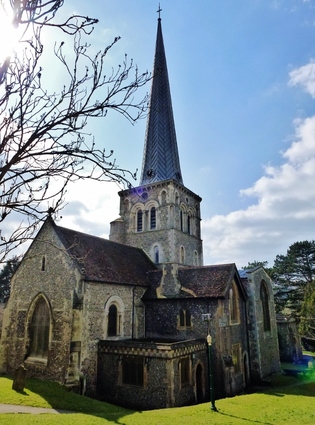
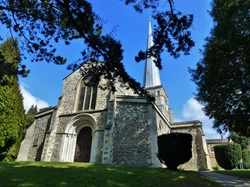
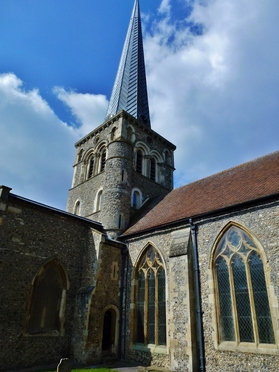
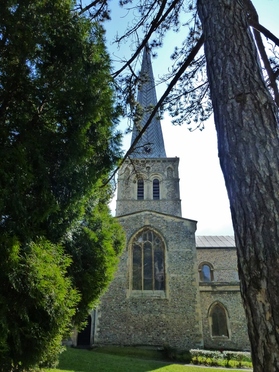
The thirteenth century spire stands high above the old town, a beacon of aesthetic sanity amongst the surrounding 1960s new town. To its west lies a park, to the east the picturesque old High Street, which runs higher than the churchyard of the big cruciform church. The Normans built such a large church between 1140-80, that no great enlargement has ever been needed. Apart from the spire and stair turret of the thirteenth century, porches and window replacements of the fourteenth and fifteenth centuries, and some sacristies or vestries, little change has been necessary.
The thirteenth century spire stands high above the old town, a beacon of aesthetic sanity amongst the surrounding 1960s new town. To its west lies a park, to the east the picturesque old High Street, which runs higher than the churchyard of the big cruciform church. The Normans built such a large church between 1140-80, that no great enlargement has ever been needed. Apart from the spire and stair turret of the thirteenth century, porches and window replacements of the fourteenth and fifteenth centuries, and some sacristies or vestries, little change has been necessary.
|
|
|
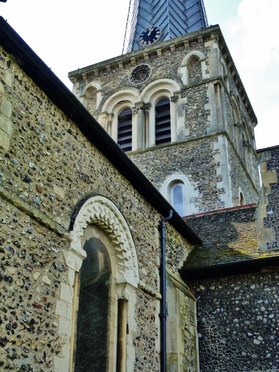
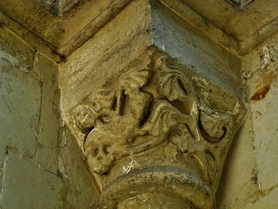
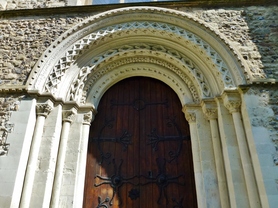
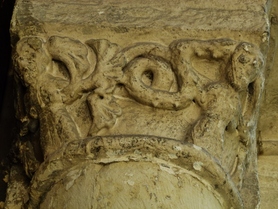
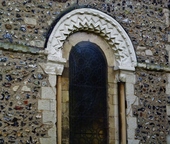
For Norman work, there are few sculptural fireworks, but plentiful zigzag over windows and doors, and nook shafts on the windows, even on the early clerestory. This was a church built on a grand scale, with a vaulted chancel and sacristy , but only on the west doorway which is recessed in orders is there any figurative work. Here a beast in foliage and what may be Adam and Eve with the serpent in Eden hide high on the capitals at the sides of the doors.
|
|
|
And unfortunately this is as far as we can go, because whenever I have been here, the church has been locked, whether during the week or at the weekend, and there is no indication of any keyholder, nor when to find the church open, if at all. The website is no help. I can get no answer from the parish office on the phone, and this site deals with things as I find them, with buildings open to the public rather than belonging to some private cult.
|
|
|
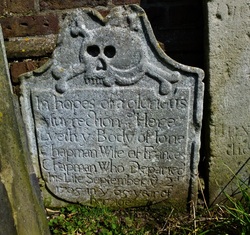
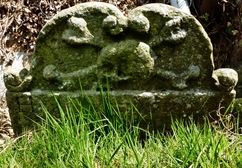
So with a final look at the grand fourteenth century windows on the south side of the chancel, and at the few tombstones saved from the philistine clearance of the graveyard, it's back again to the antique shops on the high street and the weird confusing backwards roundabouts of the main town. One of Hertfordshire's oldest biggest churches, vaulted to boot, yet not open to the public. I do hope that they haven't been taking any public money for restoration work: that really would be adding injury to insult, and show a poor grasp of ethics.
All rights reserved for this entire site. Copyright reserved to stiffleaf for all text and images, which may not be reproduced without my permission.
All rights reserved for this entire site. Copyright reserved to stiffleaf for all text and images, which may not be reproduced without my permission.
